Personalization Trends in Casino Bonuses Driven by Advanced Analytics
Olivia Günther · Jul 24, 2026

Personalization Trends in Casino Bonuses Driven by Advanced Analytics
Analytics platforms now process player behavior data at scale, allowing operators to generate tailored casino bonuses that match individual wagering patterns, deposit histories, and game preferences while operators track engagement metrics across mobile and desktop channels. These systems combine machine learning models with real-time transaction logs to adjust bonus values, trigger frequencies, and redemption conditions for different user segments throughout 2026.
Data Sources That Feed Personalization Engines
Operators collect information from account creation forms, session durations, bet sizes, game types, and withdrawal patterns, then feed those inputs into algorithms that classify users into risk adn value tiers. Research from the International Gaming Institute at UNLV shows that segmentation models improved bonus conversion rates by 18 percent in tested markets during the first half of 2026, while similar platforms in European jurisdictions reported comparable lifts when operators applied multi-variable clustering techniques.
Transaction timestamps and device identifiers further refine these models, letting platforms identify peak activity windows and preferred payment methods. One study released in July 2026 by the Canadian Gaming Association documented a 22 percent increase in bonus uptake when operators synchronized bonus delivery with users' historical deposit times, and the same report noted that geo-location data helped restrict offers to compliant jurisdictions without manual intervention.
Key Personalization Mechanisms in Use
Dynamic bonus engines adjust free spin quantities, match percentages, and cashback caps based on predicted lifetime value scores calculated daily. When a player shifts from slot machines to table games, the system can swap a standard reload bonus for one that includes live dealer credits or reduced wagering requirements on blackjack. These adjustments occur through API calls that pull fresh data every few minutes, keeping offers aligned with current behavior rather than static profiles.
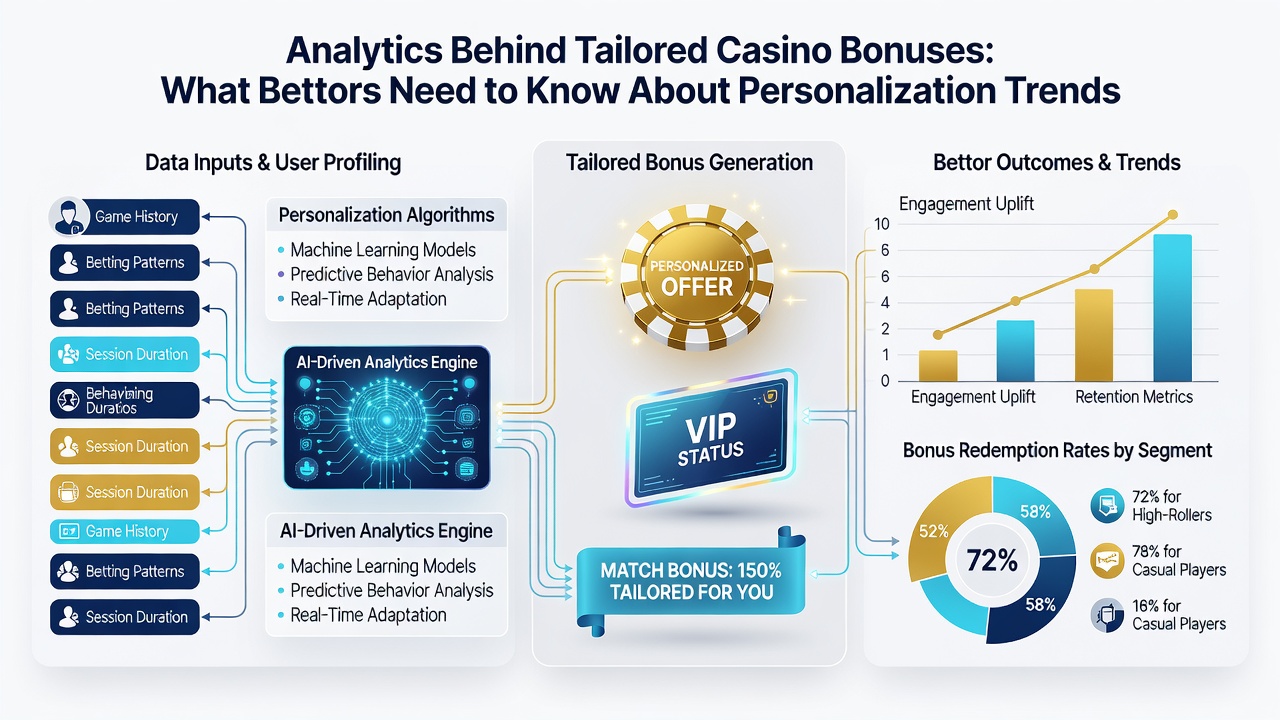
Case examples from major platforms illustrate the approach. A European operator applied churn-prediction models to deliver targeted reload bonuses to users whose session frequency had dropped for three consecutive weeks, resulting in a measurable return to prior activity levels within fourteen days according to internal dashboards shared with industry analysts. In North American markets, similar tools flagged high-value sports bettors who also played casino games and routed them exclusive progressive jackpot entries tied to their average stake size.
Regulatory and Technical Considerations
Jurisdictional rules require operators to maintain audit trails for every personalized offer, documenting the data points and algorithms used to generate each bonus. The Malta Gaming Authority updated its technical standards in early 2026 to mandate clearer disclosure of how player data influences bonus terms, prompting several operators to publish simplified explanations within their apps. Compliance teams now run regular fairness tests on segmentation logic to avoid unintended discrimination based on protected characteristics.
Encryption standards and consent management platforms handle the underlying data flows, while third-party auditors verify that bonus parameters remain within approved ranges. Observers note that these safeguards have reduced regulatory queries by roughly 15 percent in jurisdictions that adopted the new verification protocols by mid-2026.
Player Impact and Transparency Tools
Bettors receive in-app summaries that list the factors contributing to their current bonus tier, such as recent deposit volume or game variety, allowing them to adjust behavior if they want different offers. Educational pop-ups explain wagering multipliers and expiry dates before redemption, reducing support tickets related to misunderstood terms. Data from a 2026 industry survey indicated that 67 percent of users checked these summaries at least once per month when the feature was active.
Third-party comparison sites have begun publishing aggregated statistics on average bonus values by player segment, giving bettors external benchmarks without revealing individual account details. These resources draw from anonymized operator reports and help users evaluate whether their offers align with market norms across different platforms.
Conclusion
Analytics-driven personalization continues to evolve through integration of additional data streams, including biometric signals from mobile devices and cross-platform play history. Operators that maintain robust consent frameworks and transparent communication channels position themselves to meet both regulatory expectations and user expectations for relevant offers. Bettors who review the disclosed criteria behind their bonuses gain clearer insight into how their activity shapes future rewards.