Regulatory Variations Across Jurisdictions and Their Effects on Instant Payout Timelines in Mobile Wagering
Harper Hayes · Aug 11, 2026
Regulatory Variations Across Jurisdictions and Their Effects on Instant Payout Timelines in Mobile Wagering
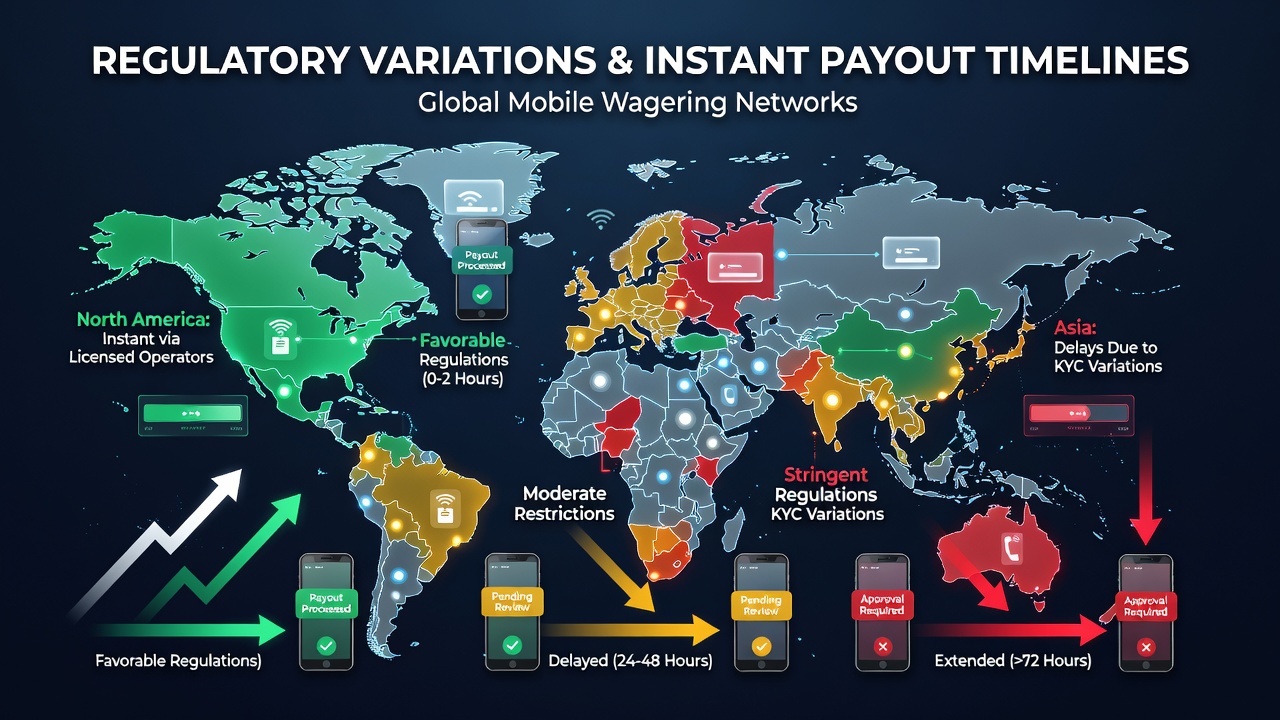
Regulatory frameworks in mobile wagering create distinct timelines for instant payouts because licensing conditions, anti-money laundering checks, and tax reporting rules differ sharply from one jurisdiction to the next. Operators must adapt their payment gateways to satisfy each set of requirements, which directly influences how quickly funds reach player accounts. Data from multiple markets shows these differences produce measurable delays even when technical systems support near-instant transfers.
Licensing Conditions That Dictate Processing Windows
Each licensing authority sets its own verification standards and settlement periods, so a single mobile platform can face several conflicting rules when serving users across borders. In jurisdictions with strict source-of-funds checks, operators hold payouts until documentation clears, extending timelines from seconds to days. Malta Gaming Authority rules, for instance, require ongoing monitoring that integrates with payment processors and forces batch reviews at set intervals. By contrast, certain Canadian provincial frameworks allow pre-approved player profiles to bypass repeated checks, shortening the window to minutes when no red flags appear.
Operators therefore maintain separate compliance queues for each market, routing transactions through the slowest required step before releasing funds. This segmented approach prevents uniform instant payouts even on networks designed for speed.
Anti-Money Laundering Rules and Their Timing Impact
Anti-money laundering obligations vary widely and often override technical payout capabilities. European Union directives impose customer due diligence thresholds that trigger manual review once cumulative withdrawals exceed certain amounts within a calendar month. Australian state regulators add extra layers through real-time reporting to financial intelligence units, creating pauses that last until automated flags clear. These staggered requirements mean a player requesting an instant payout may wait while one jurisdiction completes its process while another jurisdiction has already approved the transfer.
Regional Examples Showing Divergent Timelines
Take one operator active in both the European Union and several Australian states during August 2026. Withdrawal requests from EU users faced a mandatory 24-hour cooling period under updated tax withholding protocols, whereas Australian users saw funds arrive in under 90 seconds once identity verification had occurred at account creation. The difference stems directly from each regulator's stance on automated versus manual reconciliation rather than any variation in banking rails.
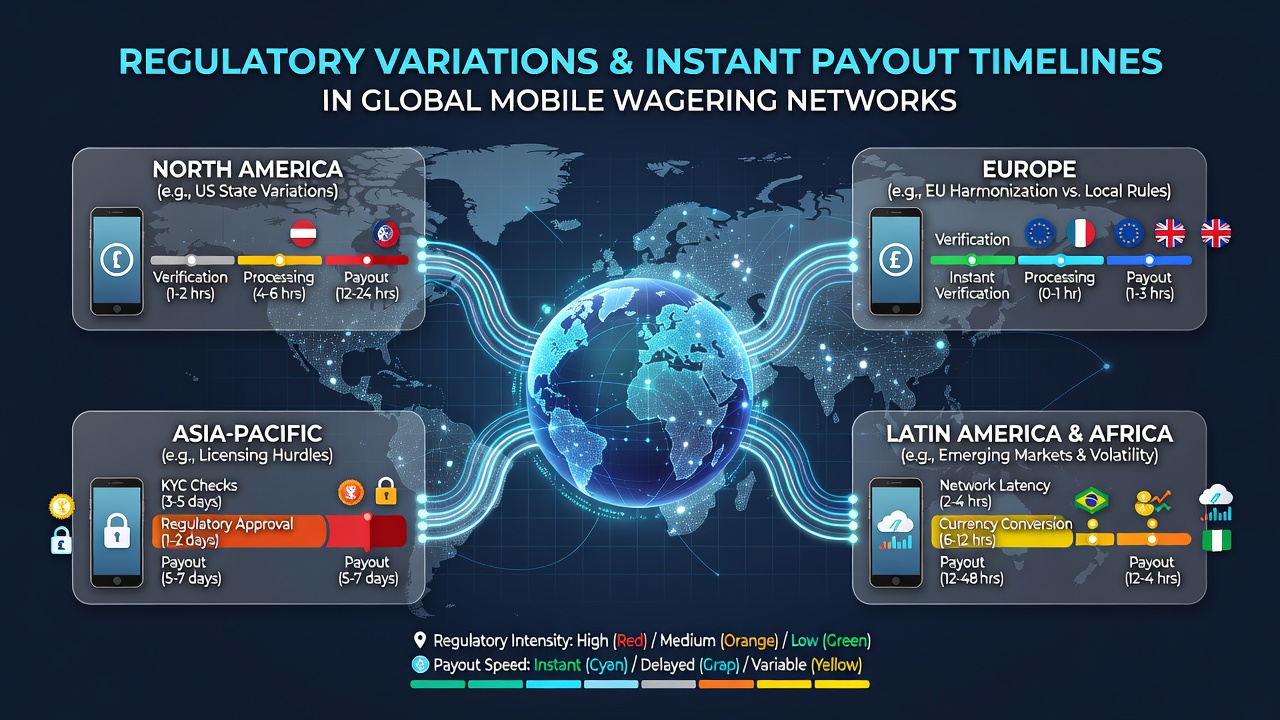
Similar patterns appear in North American markets where state-by-state rules create additional fragmentation. Platforms serving multiple U.S. states must reconcile varying tax reporting deadlines, which can push some payouts into the next business day even when the underlying payment network supports instant settlement.
Operator Adaptations and Technical Workarounds
Companies respond by building modular payment engines that apply jurisdiction-specific logic before any funds move. These engines check regulatory databases in real time, apply the strictest applicable rule, and then release the transaction only after all conditions clear. Industry reports indicate such systems reduce compliance errors but add milliseconds to each request, which accumulates when thousands of payouts process simultaneously.
Some networks partner with locally licensed payment providers to absorb part of the regulatory burden, shifting verification steps earlier in the player journey. This front-loading shortens final payout windows in markets that accept pre-cleared profiles yet leaves delays intact where regulators prohibit such pre-approvals.
Conclusion
Regulatory variations continue to shape payout timelines because each authority maintains distinct priorities around consumer protection, tax collection, and financial oversight. Mobile wagering networks accommodate these differences through segmented processing paths that balance speed against compliance, resulting in instant payouts that remain instant only within the boundaries of a single regulatory regime. As new licensing frameworks emerge, operators will keep refining their systems to align technical capabilities with the latest set of jurisdictional demands.